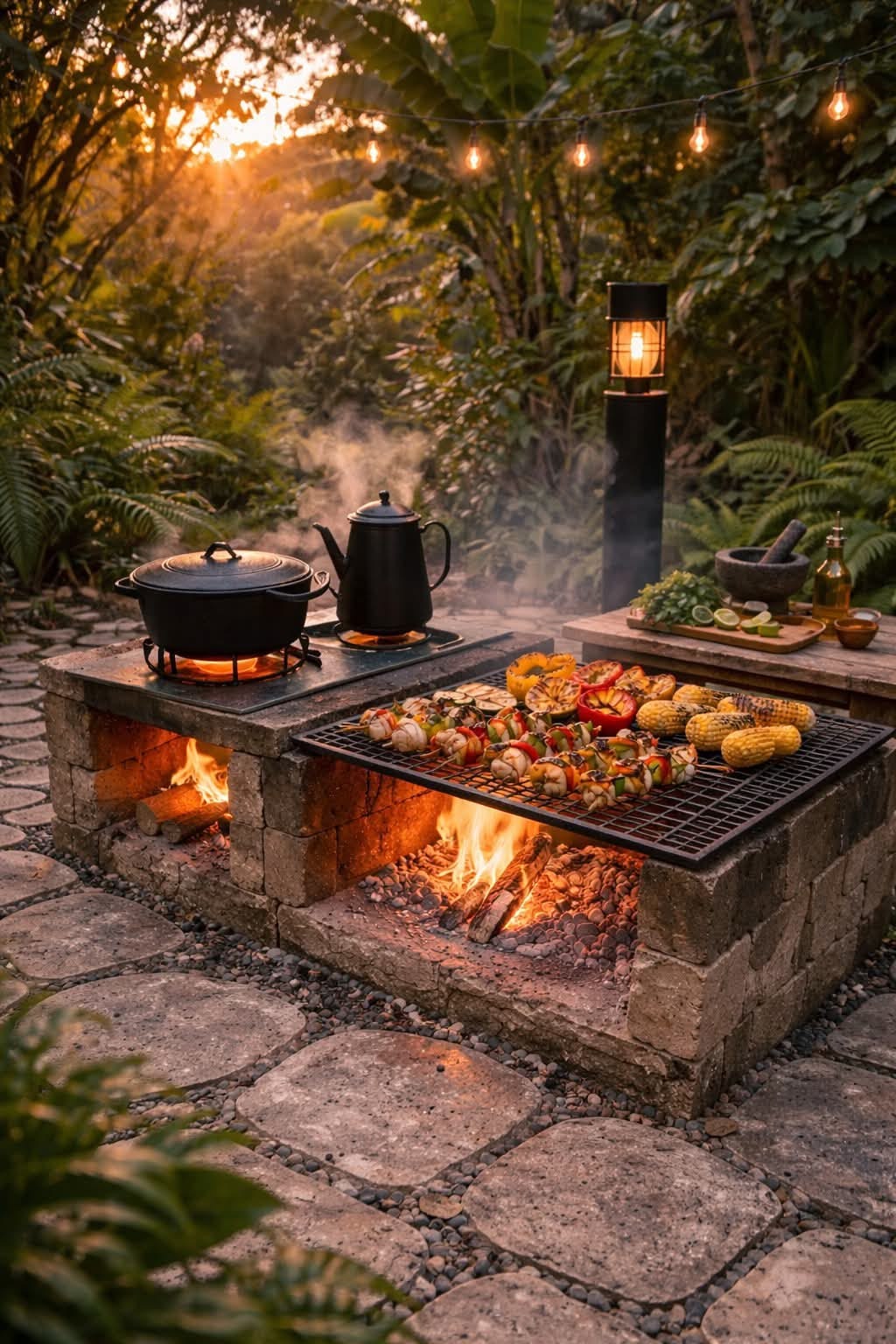
1. Understanding Smoke: Clean vs. Dirty Smoke
The difference between award-winning BBQ and bitter, acrid meat is smoke quality. Clean smoke appears thin, blue, or nearly invisible, with a sweet, pleasant aroma. www.guibbqirvine.com Dirty smoke is thick, white, or gray, billowing like a freight train, smelling sharp and unpleasant. Dirty smoke contains creosote—a tar-like substance that coats meat with chemical bitterness. To achieve clean smoke, use fully seasoned wood (dried 6-12 months) with moisture content below 20%. Never use green (fresh-cut) wood or treated lumber. For charcoal grills, light charcoal in chimney starter without lighter fluid, wait until all coals are ashed over, then add dry wood chunks (not chips). Chunks burn slower and cleaner. For offsets and stick burners, maintain a small, hot fire with good airflow. The fire should look like a campfire: bright orange flames dancing over coals. If you see thick smoke, open vents fully to increase oxygen. Always preheat your wood on top of the firebox for 30 minutes before adding—cold wood creates dirty smoke. Add only one or two chunks at a time, waiting for clean smoke to return before adding meat. Never soak wood; wet wood steams and creates acidic, bitter compounds. For gas grills, use a smoker box with dry chips, replacing every 45 minutes. The mantra: thin blue smoke equals flavor; thick white smoke equals fail.
2. The Stall, Texas Crutch, and Managing Cook Times
Every low-and-slow pitmaster faces the stall—a frustrating period when meat internal temperature plateaus for hours between 150-170°F. This occurs because evaporative cooling from surface moisture balances the heat entering the meat. A 10-pound pork shoulder may stall for 3-4 hours. Understanding the stall prevents panicked temperature increases (which dry meat). Solutions include: starting earlier than expected, planning 90 minutes per pound total cook time, and using the Texas crutch. The crutch is wrapping meat tightly in unwaxed butcher paper or heavy aluminum foil with a splash of liquid (apple juice, broth, cider vinegar). Wrapping stops evaporation, forcing temperature to rise. Add 2 tablespoons of butter for flavor. Return wrapped meat to smoker until internal reaches 195-205°F. Butcher paper preserves bark better than foil; foil speeds cooking more. After the crutch, you can unwrap for final 30 minutes to re-crisp bark. Alternative method: boat technique—wrap only bottom of meat, leaving top exposed. Some purists refuse wrapping, accepting longer stalls for superior bark. For competition BBQ, wrapping is standard. Regardless of method, never rush past 275°F trying to beat the stall; you’ll create tough, dry meat. Instead, pour bourbon or coffee into your water pan to maintain humidity and add flavor during stall periods.
3. Wood Selection and Flavor Pairing by Protein
Every wood species imparts distinct flavor profiles matching specific meats. Hickory: strong, bacon-like, classic for pork shoulders and ribs. Mesquite: intense, earthy, slightly sweet—excellent for beef brisket but overpowering for poultry (use sparingly). Oak: medium strength, clean, versatile for beef, pork, or lamb—the Texas favorite. Pecan: mild, nutty, similar to hickory but sweeter—perfect for poultry and pork. Apple: mild, fruity, slightly sweet—ideal for chicken, turkey, pork tenderloin. Cherry: mild, sweet, produces deep mahogany color—beautiful on ribs and duck. Maple: very mild, subtle sweetness—works for vegetables and cheese. Walnut: strong, slightly bitter—blend with fruit woods. Avoid: pine, cedar, spruce (toxic sap creates poisonous compounds), pressure-treated lumber (chemicals), painted or stained wood. For beginners, start with fruit woods (apple or cherry) as they’re most forgiving. Blend woods for complexity: 2 parts hickory to 1 part cherry for ribs. Use 3-4 wood chunks for a 6-hour smoke, adding one chunk every 2 hours. For pellet grills, experiment with blends like competition blend (maple, hickory, cherry). Never use charcoal briquettes containing lighter fluid for smoking. Store wood in dry location off ground. Wood chips work for short smokes (fish, 1-2 hours) but need replacement hourly. Learn your wood’s burn characteristics by smoking cheap chicken thighs before expensive brisket.
4. Maintaining Consistent Temperature in Any Smoker
Temperature fluctuation kills BBQ quality. Maintain 225-275°F depending on protein: 225°F for brisket (breaks down collagen slowly), 250°F for pork shoulders, 275°F for ribs and poultry. For charcoal smokers (Weber Smokey Mountain, kamado), use the minion method: fill charcoal ring with unlit briquettes, bury 10-15 lit coals on top, add wood chunks throughout. Vents: bottom vent controls air intake (more air = hotter fire), top vent releases heat. Keep top vent fully open always; adjust bottom vent only. Small changes produce big results—adjust vents 1/8 inch and wait 10 minutes. For offset smokers, maintain a small, hot fire (not smoldering). Add one split log every 30-45 minutes, always preheating wood on firebox. Keep firebox door slightly open for oxygen. For pellet grills, trust the controller but clean fire pot before each long cook—ash buildup causes temperature swings. Water pans stabilize temperature: place deep disposable pan on lower grate filled with hot water (not cold—cold lowers temperature drastically). Water adds humidity, reduces temperature spikes, and catches drips. Insulate your smoker with welding blankets in cold weather. Always calibrate your thermometer: ice water tests accuracy. Use two thermometers—one at grate level, one in meat. Never trust built-in lid thermometers; they read 50-100°F higher than grate. Log your vent positions, outdoor temperature, and wind conditions to develop intuition. Wind is the enemy—set up wind blocks if necessary.
5. Resting, Slicing, and Serving Smoked Masterpieces
The final secrets transform good BBQ into transcendent BBQ. Resting is as critical as cooking. When meat hits target internal temperature (195-205°F for brisket and pork), remove from smoker but keep wrapped. Place in a dry cooler lined with towels. Close cooler and rest 1-4 hours. Meat stays safe above 140°F for hours. During rest, collagen continues converting to gelatin, and moisture redistributes. For brisket, rest until internal drops to 150-160°F before slicing—slicing too hot causes moisture loss. For pork shoulder, pull meat at 203°F, rest 1 hour minimum then shred using forks or bear claws. For ribs, rest 15-20 minutes only. Slicing technique: always identify grain direction (muscle fiber lines). Slice perpendicular to grain using long, smooth strokes with a sharp slicing knife (not serrated). For brisket, separate flat from point at fat seam. Slice flat 1/4 inch thick across the grain. Cube point for burnt ends: toss in BBQ sauce, return to smoker for 1 hour. For pork shoulder, shred then sprinkle with additional rub and a splash of apple juice. Serve on warm plates to maintain temperature. Pour collected resting juices over sliced meat (strain solids if desired). Accompaniments: white bread, pickles, raw onion, barbecue sauce on side. For presentation, arrange slices overlapping on butcher paper-lined platter. Garnish with parsley or cilantro. Serve immediately—smoked meat cools quickly. Leftovers refrigerate up to 4 days; reheat gently in 250°F oven wrapped in foil with moisture. Never microwave smoked meat (turns rubbery). Master these secrets, and your backyard BBQ will rival Texas’s finest smokehouses.